
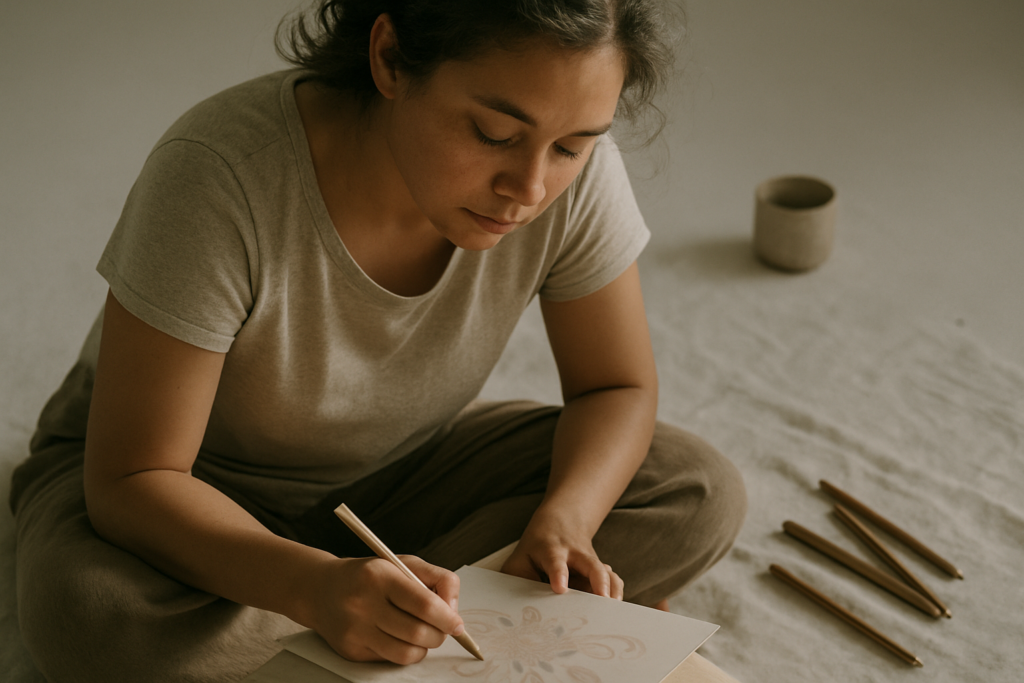
What Art Therapy Actually Is
Art therapy isn’t about creating something beautiful or impressive. In fact, the less pressure you feel to “perform,” the better. It’s about using the act of creating drawing, painting, scribbling, sculpting as a way to access what’s going on beneath the surface. When you can’t find the words, art gives you another way to process stress, emotion, and thoughts that may be stuck.
Licensed art therapists are trained to guide people through this. They use visual expression with patients the same way a counselor might use talk therapy only here, creative tools do the heavy lifting. It’s used clinically for everything from trauma work to anxiety management and even chronic pain.
But you don’t need sessions or a diagnosis to benefit. Anyone can pick up a marker or mix colors on paper and discover surprising insight. It’s an approach to self care that’s quiet, hands on, and deeply personal. The goal isn’t to be good at drawing the goal is to be honest, curious, and open enough to see what shows up when you create.
Art therapy works because it skips the filter of words. You’re not explaining you’re expressing. Color, texture, motion these tap directly into your senses. That kind of sensory input pulls you into the moment, away from the noise in your head.
What’s happening under the hood? When you’re drawing or sculpting, both sides of your brain kick in. The logical left side focuses on shapes, order, process. The creative right side handles emotion, intuition, and flow. This balance helps regulate your mood and lets you access feelings you might not have language for.
Best part? No need to meditate or sit still. Art therapy brings mindfulness through doing. You get the calm without the cushion. It’s movement with meaning.
Discover more on the benefits of art therapy
Easy Ways to Incorporate It Daily

Bringing art therapy into your everyday life doesn’t require a studio or hours of free time. All it takes is a few intentional habits and a willingness to explore your creativity without judgment. Below are a few practical techniques you can begin using today.
Start with a Morning Sketch
Use a pen, pencil, or crayon to sketch freely after you wake up. This can:
Help set an emotional tone or intention for the day
Serve as a way to process fragments of dreams or lingering emotions
Offer a quiet moment of reflection before daily distractions begin
Keep a small sketchpad and tool of choice near your bedside for consistency.
Try Color Journaling
Instead of writing in a traditional journal, express your mood with colors, shapes, or abstract compositions.
Assign colors to different emotions (e.g., blues for calm, reds for stress)
Let each page reflect your inner state without worrying about what it looks like
This method is ideal for visual thinkers who may struggle to put feelings into words.
Embrace Mindful Creating Over Perfectionism
You don’t need to be skilled to benefit from art therapy. Focus on the process, not the product:
Create collages from magazines or old newspapers
Finger paint to reconnect with a sense of play
Scribble freely and intuitively without trying to form recognizable images
There’s no “wrong way” to do it what matters is how it makes you feel.
Build Emotional Playlists with Color or Shape
Think of your creative session like making a playlist except instead of sounds, you’re using visuals.
Use colors, lines, and textures to represent specific feelings or memories
Consider using new materials (like watercolor or pastels) to expand your vocabulary of expression
Title your creations to give clarity or closure
This technique helps externalize and organize emotions you’re struggling to verbalize.
Make Art Supplies Easy to Access
One of the biggest barriers to consistency is inconvenience.
Keep markers, paper, and basic tools in plain sight or in a ready to use container
Display unfinished work to encourage creative continuity
Think of your materials as invitations instead of chores
The goal is to reduce friction. The more accessible your tools, the more likely you are to use them regularly.
Start small, stay curious, and let your creative habits grow on their own terms.
Real Life Benefits You’re Likely to Feel
Let’s cut to it life’s heavy sometimes. Art therapy helps unload. Picking up a pen, brush, or pair of scissors after a draining day isn’t just a distraction it’s a reset button. You give your nervous system something to do besides spiral. That equals lower anxiety and a faster shift back into calm.
Another big shift? Control. When you’re creating, you’re calling the shots. Even just choosing a color or deciding where a line goes can recalibrate how you think about bigger decisions. Art gives you a sense of agency, especially when everything else feels out of your hands.
This sense of groundedness extends beyond the canvas too. Regular creative practice can lead to better sleep, sharper focus, and more patience. You’re not just feeling better you’re reacting better. Talking to your boss, replying to that text, or getting through traffic becomes less of a fuse lighter.
Want to go deeper? Learn more about the key advantages in this guide on the benefits of art therapy.
Final Take
You don’t need a fine arts degree or shelves of paint to tap into this. Art therapy isn’t reserved for the gifted it’s for the curious. You can start with a pen, a napkin, and five minutes. This isn’t about judgment or aesthetics. It’s about reflection, release, and reconnecting to yourself.
Think of it less like a creative breakthrough and more like brushing your teeth. Regular, simple. A ritual. The benefit is in the rhythm the habit of pausing, expressing, noticing. Some days you’ll make a mess. Others, something that surprises you. Doesn’t matter. Just keep showing up. That’s when the shifts happen.
 Leonerico Vaughan, as both an author and collaborator in the development of Avant Garde Artistry Hub, brings a unique perspective to the platform. His contributions center around the intersection of art and technology, offering artists valuable insights into the latest creative tools and techniques. Leonerico’s passion for innovation shines through in his work, helping to keep the artistic community informed and empowered.
In addition to his writing, Leonerico has played a key role in shaping the platform’s resources, particularly those focused on helping artists build sustainable careers. His dedication to the success of Avant Garde Artistry Hub makes him a vital part of its mission to support and inspire modern artists.
Leonerico Vaughan, as both an author and collaborator in the development of Avant Garde Artistry Hub, brings a unique perspective to the platform. His contributions center around the intersection of art and technology, offering artists valuable insights into the latest creative tools and techniques. Leonerico’s passion for innovation shines through in his work, helping to keep the artistic community informed and empowered.
In addition to his writing, Leonerico has played a key role in shaping the platform’s resources, particularly those focused on helping artists build sustainable careers. His dedication to the success of Avant Garde Artistry Hub makes him a vital part of its mission to support and inspire modern artists.