
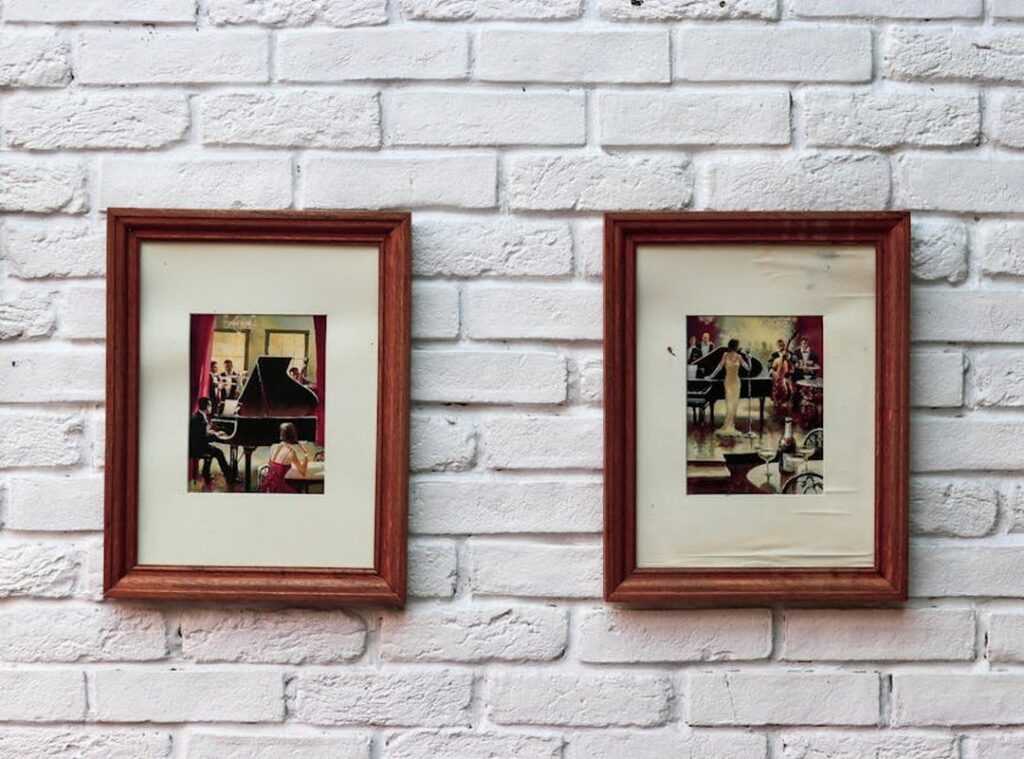
You’re standing in front of a painting (and) it breathes.
Not because the brushwork is genius (though it might be). But because the light hits just right. Because the wall is the perfect shade of gray.
Because the frame isn’t too heavy, the spacing isn’t too tight, and the height puts your eyes exactly where the artist meant them to land.
That’s not magic. It’s calculation. It’s physics.
It’s How Do Galleries Hang Paintings Arcahexchibto.
Most people don’t notice it. Artists rarely get taught it. Collectors assume it’s just “taste.”
Curators wing it (until) something falls.
I’ve watched installations in MoMA basements, Chelsea white cubes, and nonprofit basements with flickering fluorescents. I’ve measured light angles at 3 a.m. with conservation staff. I’ve seen paintings warped by bad humidity control.
And salvaged by the right wire system.
This isn’t about art history. It’s about how weight, wattage, and wall texture change perception. How a half-inch shift in height alters emotional response.
You’ll learn what actually works. Not theory. No fluff.
Just the physical rules that make paintings feel alive.
The Four Pillars of Hanging Paintings Right
I hang paintings for a living. Not as a hobby. Not on weekends.
For money. And I’ve watched too many people ruin good art with bad walls.
First: alignment. Center the piece at 57 (60) inches from floor to frame center. That’s not a suggestion.
It’s where eyes land in a standard room. Go lower and it feels squat. Higher and it’s shouting down at you.
Spacing? Minimum 24 inches between works. Less and they fight.
More than 36 inches above furniture and the wall breathes wrong. (Yes, walls breathe. You feel it.)
Wall integrity matters more than your drill bit. Hit a stud? Great.
Miss it? Toggle bolts only if the piece weighs under 20 pounds. Anything heavier needs proper anchoring (not) hope.
Structural support isn’t about looks. It’s about survival. French cleats hold forever.
Wire systems sag. I’ve seen $12,000 pieces tilt 3 degrees over six months because someone used cheap wire.
Crooked alignment distorts how you read the whole composition. Overcrowding triggers visual fatigue. Your brain just checks out.
You’ve felt it. That “ugh, my eyes hurt” moment in a gallery? That’s bad spacing.
Large-scale or immersive works break these rules. On purpose. They demand different sightlines.
That’s why Arcahexchibto exists. It handles those exceptions without apology.
How Do Galleries Hang Paintings Arcahexchibto? Same way I do: measure twice, drill once, and never assume the wall is telling the truth.
You’ll thank me later.
Lighting That Reveals (Not) Distorts (the) Painting
I hung my first oil painting under a track light that made the whole thing look like it had a fever.
It glowed yellow. The shadows bled. The brushstrokes vanished.
That’s how I learned: lighting doesn’t just show art. It interprets it.
Track-mounted directional LEDs are the default in most galleries. They’re precise. They’re adjustable.
And they’re useless if you don’t control the angle.
Ambient ceiling washes? They set context. Not focus.
I use them only to keep the room from feeling like a surgical suite.
Zero-UV spotlights matter more than people admit. UV degrades pigment. Fast.
Especially in watercolor or vintage prints. I’ve seen a 1920s gouache fade three shades in six months under the wrong bulb.
Color temperature changes everything. 3000K gives oil paintings warmth and depth. Like candlelight in a Dutch master. 4000K cuts through acrylic glare and sharpens photorealism. It’s clinical.
But necessary for detail.
Beam angle isn’t guesswork. 25° for small works. 36° for medium. 10°. 15° for high-detail close-ups (like a Vermeer eye).
Overhead fluorescents? Glare city. Fixtures that cast hard shadows?
They compete with the painting. Mixing color temps in one room? It makes your eyes tired.
And your art look confused.
How Do Galleries Hang Paintings Arcahexchibto? They test every fixture on the actual wall, with the actual frame, before the opening night.
Pro tip: Stand where the viewer stands. Then squint. If you see reflection (not) pigment.
Framing Is Not Just Decoration
I frame things for protection first. Aesthetics come second.
I wrote more about this in this article.
If your goal is archival safety, you skip the pretty paper and reach for ISO 18902. Compliant materials. Acid-free mat board.
UV-filtering acrylic glazing. Cotton rag backing. That’s non-negotiable.
Some galleries skip frames entirely. I get it. Minimalist shows look clean.
But then wall prep changes completely. No frame means no hanging wire. You’re drilling into drywall or using French cleats.
And if the artwork shifts even a millimeter? It’s obvious.
Humidity matters (even) for a two-week show. I’ve seen a watercolor bloom on day three because the HVAC failed overnight. You need a hygrometer.
Not optional.
Frame width changes how people read scale. Thin black frames disappear. Wide gold ones scream look at me.
Choose one. Don’t hedge.
How Do Galleries Hang Paintings Arcahexchibto? They don’t all do it the same way. Some use magnets.
Some use custom tracks. Some still nail into studs (and) yes, that still works.
You think canvas is tough? Try rolling it wrong. I’ve seen cracks form in under an hour. Conservation-grade handling starts before the wall.
Can canvas paintings be rolled arcahexchibto? Yes (but) only with proper tension control and climate-stable storage. Can canvas paintings be rolled arcahexchibto
Skip the decorative foam core. It yellows. It off-gasses.
It ruins everything.
Mount it right. Or don’t mount it at all.
The Psychology of Placement: Why Your Painting’s Neighbor Matters
I hang paintings for a living. Not as a hobby. As a job.
And no, it’s not just about nails and levels.
Chronological flow? Fine for history class. In galleries, I group by tone.
Sightlines are weapons. That big canvas at the entry? It’s not there because it’s “important.” It’s there to stop you cold.
A sharp blue next to a muddy brown kills both. You feel that. You just don’t know why.
Make you breathe. Then the corner piece pulls you left. The dead-end wall?
That’s where I put the quiet ones (the) ones that need silence to land.
Breathing room isn’t decor advice. It’s cognitive hygiene. Studies show viewers stay 30% longer when negative space covers more than 40% of the wall.
Less clutter = more attention per inch.
Last month, I swapped two pieces in Arcahexchibto’s west wing. One was angry red. The other, soft charcoal.
Side by side? They argued. Moved three feet apart?
Suddenly they were having a conversation.
That’s how galleries think. That’s how they hang paintings.
If you’re wondering How Do Galleries Hang Paintings Arcahexchibto, start with intent (not) hardware.
Need to get your work into that kind of space? How to Submit
Hang It Right the First Time
I’ve seen too many shows ruined by bad hanging.
You know the feeling. Stunning work, wasted by crooked lines or glare.
How Do Galleries Hang Paintings Arcahexchibto? Not with guesswork. With three real tools: the 57-inch rule, the 25° beam angle, and acid-free matting.
That’s it. No theory. Just what you need on install day.
You don’t need all four pillars at once. Start with one. Fix the height first.
Then the light. Then the mat.
Most people skip the mat (and) watch their art yellow in two years. (Don’t be most people.)
Grab a pen. Sketch the checklist now. Or download it.
Either way. Do it before you drive to the gallery.
Great art deserves great presentation. Start with one principle, and build from there.
 Anna Freehill, a key contributor to Avant Garde Artistry Hub, plays a vital role in shaping the platform’s vision. As an author and collaborator, she helps bridge the worlds of art and technology, offering insightful articles that guide artists through the rapidly evolving creative landscape. Anna’s dedication to highlighting art's therapeutic value has contributed to the platform’s focus on mental and emotional well-being through creative expression.
Her involvement in building Avant Garde Artistry Hub has been instrumental in providing valuable resources to artists seeking to enhance their careers. Whether through her writing on business strategies or her support in platform development, Anna is committed to fostering a space where artists can thrive and embrace the future of art.
Anna Freehill, a key contributor to Avant Garde Artistry Hub, plays a vital role in shaping the platform’s vision. As an author and collaborator, she helps bridge the worlds of art and technology, offering insightful articles that guide artists through the rapidly evolving creative landscape. Anna’s dedication to highlighting art's therapeutic value has contributed to the platform’s focus on mental and emotional well-being through creative expression.
Her involvement in building Avant Garde Artistry Hub has been instrumental in providing valuable resources to artists seeking to enhance their careers. Whether through her writing on business strategies or her support in platform development, Anna is committed to fostering a space where artists can thrive and embrace the future of art.