
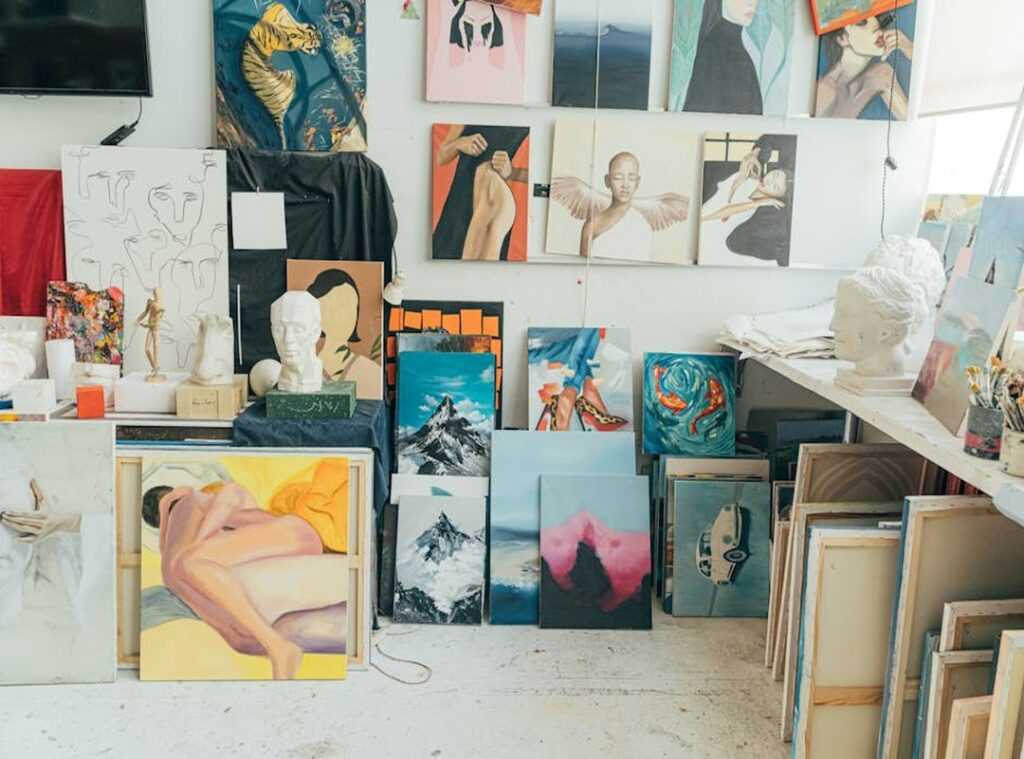
You’ve walked into one of those galleries.
White walls. Hushed voices. That weird feeling you’re supposed to know something but don’t.
I’ve been there too. Staring at a painting like it’s a test I didn’t study for.
Why does art have to feel like a museum exam?
It doesn’t. And it shouldn’t.
Most galleries aren’t boring because the art is bad. They’re boring because nobody thought about how you’d actually experience it.
This isn’t about hanging pretty things on a wall.
It’s about building something alive (something) that pulls you in, holds your attention, makes you lean closer.
That’s what Articles Art Artypaintgall really means.
I’ve watched professional curators do this for years. Not theory. Real rooms.
Real people. Real reactions.
In the next few minutes, I’ll show you exactly how they do it.
What an Artistic Articles Paint Gallery Really Is
It’s not a brand. It’s not a gallery name. It’s a method.
An Artistic Articles Paint Gallery is a space where paintings don’t hang alone. They’re surrounded by things that talk back to them.
I’ve walked into dozens of so-called “art galleries” that just slap canvases on walls and call it a day. Boring. Empty.
You walk out remembering nothing.
That’s not what this is.
Learn more about how the real ones work.
The first part is The Curation. Not picking pretty pictures. Choosing pieces that argue with each other.
A 1923 watercolor next to a 2021 oil sketch (same) subject, different century, same tension. That’s narrative. That’s intention.
You feel it in your gut before your brain catches up.
Then comes The Context. “Articles” here means artist statements scrawled on index cards. Sketchbooks open to the page before the final piece. A rusted nail from the studio floor, labeled and placed beside a painting about labor.
Real stuff. Tangible proof of process.
Not wall text written by a PR firm.
Finally: The Conversation. This is where most galleries fail. You stand in front of a painting.
Then you read the note. Then you look again. And suddenly (it) shifts.
Your eyes move faster. You lean in. You ask yourself: Why did she paint the sky that color after writing that line?
That’s the point.
Articles Art this post isn’t a buzzword. It’s a checklist. If your gallery doesn’t do all three.
Curation, context, conversation (it’s) just a wall with art on it.
And walls don’t talk.
You know the difference when you see it.
Don’t settle for silence.
The Curator’s Secret: It Starts With a Question
I don’t walk into a storage room and grab whatever’s hanging. I start with a question. Or a feeling.
Like: What does it mean to be alone in a crowd?
That’s how “Urban Solitude” began. Not with paintings. Not with frames.
With that itch.
So I looked for work that held tension. A watercolor of an empty bus stop at 3 a.m. A sound recording of rain on pavement.
No voices, just echo. A series of street photos where people stand inches apart but never make eye contact.
These aren’t just Articles Art Artypaintgall. They’re evidence. Each one answers part of the question.
Or deepens it.
Then comes the space. Lighting isn’t just about visibility. It’s tone.
I dimmed the first room. Used cool gray walls. Made the path narrow at first.
Like walking down an alley.
Then opened it up. Warmer light. Softer edges.
That’s pacing. That’s story.
You don’t notice it until you’re pulled through it.
The biggest mistake I see? People treat curation like filing. It’s not taxonomy.
I wrote more about this in Art Listings Artypaintgall.
It’s editing. You cut what doesn’t serve the question (even) if it’s beautiful.
Pro Tip: Ask yourself. What story is this collection trying to tell me?
If you can’t answer in one sentence, the curator missed something.
I’ve watched visitors pause at the wrong spot. Stand too long in front of a loud piece when the quiet one two steps over was the hinge. That’s why wall color matters.
Why spacing matters. Why silence between works is as loaded as the art itself.
It’s not decoration. It’s dialogue. And you’re part of it.
Beyond the Canvas: What Makes a Gallery Feel Alive
I used to think paintings were enough. Turns out? They’re just the headline.
The real story lives in the Articles Art Artypaintgall (the) objects and words that surround the work. Not filler. Not decoration.
Entry points.
Artist’s personal items first. Brushes with dried paint crusted in the bristles. A chipped palette stained blue and burnt umber.
A journal open to a half-scribbled idea. These aren’t props. They’re proof the person behind the painting lived it.
You hold that brush and suddenly the canvas isn’t distant anymore.
Preliminary works next. Charcoal sketches pinned crookedly. Small oil studies testing light on a face.
These show process. Not perfection. They let viewers breathe.
They say: This didn’t drop from the sky.
Textual elements matter more than most galleries admit. A short poem beside a space. A quote the artist lived by.
Even wall text that names the weather the day the piece was started. Language gives permission to feel something specific.
Multimedia? Video interviews where the artist fumbles a sentence. Interactive screens showing pigment recipes.
These aren’t gimmicks if they’re rooted in honesty.
All of this exists for one reason: some people don’t walk into a gallery and get the painting right away. But they might pick up a journal. Or watch a shaky 90-second clip of hands mixing cadmium red.
That’s where connection starts.
If you want to see how this works in practice, check the Art Listings Artypaintgall. It’s not a catalog. It’s a curated set of anchors.
How to Visit a Gallery and See What Others Miss
I walk in. I don’t read anything first. I just walk.
The Quick Scan takes 90 seconds. No stops. No notes.
Just eyes open, brain quiet, feet moving. You’re mapping energy (where) the light hits, where people pause, where your stomach drops.
Then I go back. Not to everything. To two or three pieces that pulled me.
That’s the Deep Dive. I stand close. I step back.
I look at the edges. I ask: What did they leave out?
That’s when I hunt for the Articles Art Artypaintgall (the) wall text, the tiny bio, the date, the medium. Not to “get it.” To see what the artist wanted you to notice first. (Spoiler: It’s rarely the thing you noticed.)
Ignore the pressure to understand every frame. That’s nonsense. Art isn’t a test.
Find one piece that makes you pause longer than you meant to. That’s enough.
Then (here’s) the real test (pick) two works hanging side by side. What are they arguing about? One’s loud.
One’s quiet. One’s old. One’s made last week.
They’re talking. You just have to listen.
Want more context on artists like these? Check the Art Directory Artypaintgall.
Find the Story in Your Next Art Adventure
Galleries feel cold when you’re just scanning walls. You’ve stood there. Blank.
Unmoved. Wondering why it doesn’t click.
It’s not you. It’s the approach.
Articles Art Artypaintgall gives you the lens (not) the lecture.
A real narrative, not a label slapped beside a painting.
Next time you walk into a gallery or museum, try the 3-step system. Just once. See what shifts.
That quiet tension in the brushstrokes? The odd placement of the chair? The way light hits that corner?
Those aren’t accidents. They’re clues.
You already want to feel something.
So stop waiting for permission.
Go. Look. Ask: What story is this room trying to tell me?
 Anna Freehill, a key contributor to Avant Garde Artistry Hub, plays a vital role in shaping the platform’s vision. As an author and collaborator, she helps bridge the worlds of art and technology, offering insightful articles that guide artists through the rapidly evolving creative landscape. Anna’s dedication to highlighting art's therapeutic value has contributed to the platform’s focus on mental and emotional well-being through creative expression.
Her involvement in building Avant Garde Artistry Hub has been instrumental in providing valuable resources to artists seeking to enhance their careers. Whether through her writing on business strategies or her support in platform development, Anna is committed to fostering a space where artists can thrive and embrace the future of art.
Anna Freehill, a key contributor to Avant Garde Artistry Hub, plays a vital role in shaping the platform’s vision. As an author and collaborator, she helps bridge the worlds of art and technology, offering insightful articles that guide artists through the rapidly evolving creative landscape. Anna’s dedication to highlighting art's therapeutic value has contributed to the platform’s focus on mental and emotional well-being through creative expression.
Her involvement in building Avant Garde Artistry Hub has been instrumental in providing valuable resources to artists seeking to enhance their careers. Whether through her writing on business strategies or her support in platform development, Anna is committed to fostering a space where artists can thrive and embrace the future of art.