
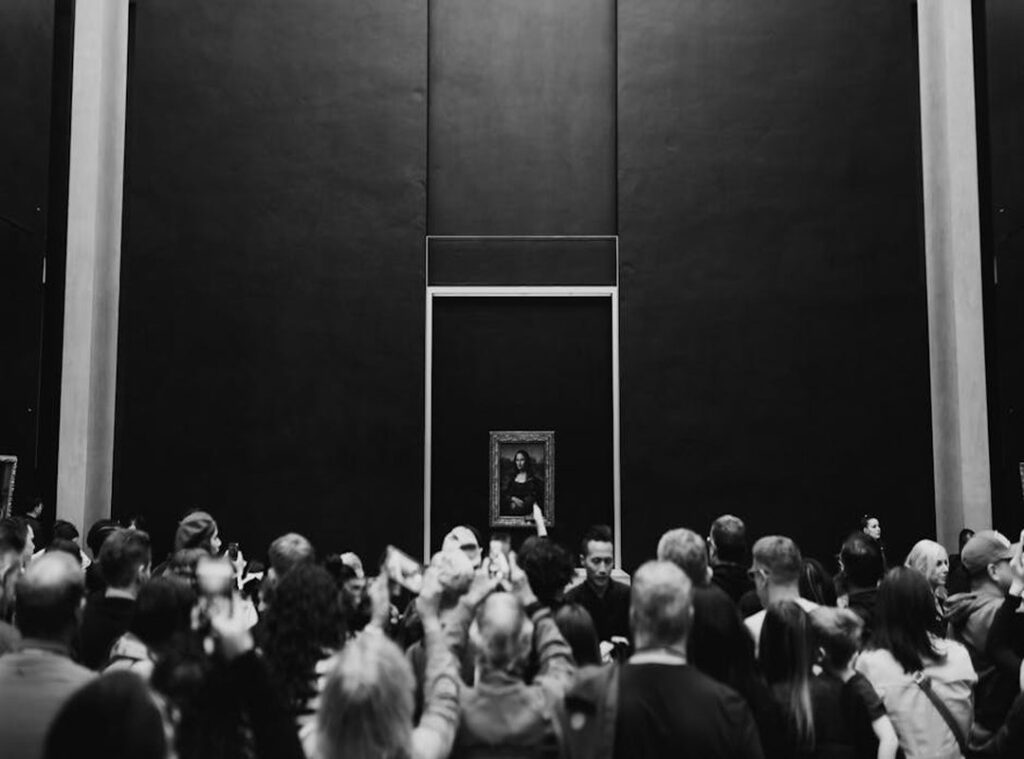
You walk into a gallery and freeze.
Where do you even begin?
I’ve watched people stand in front of a painting for three minutes, then walk away without knowing why it matters.
That’s not your fault. It’s the labels’ fault. Tiny plaques with dates and mediums and zero soul.
This isn’t that.
This is a curator’s tour (not) a textbook list.
I’ve spent years inside Artypaintgallery’s storage rooms, studio visits, and late-night conversations with the artists themselves.
You’ll get the real story behind each piece. Not just what it is. But why it stuck.
Why it got attention. Why it still does.
Art Famous Articles Artypaintgall isn’t about popularity contests. It’s about weight.
By the end, you won’t just recognize these works.
You’ll understand them.
The Cornerstone: Starry Night Over the Rhône
I saw it in person last fall.
Standing six feet away, I forgot to breathe.
This is the first piece you hit when you walk into the gallery. It’s not just famous. It’s the anchor.
Van Gogh painted it in 1888. Same year he moved to Arles, same year he cut off his ear (though that came later). France was industrializing fast.
Impressionism was peaking. And Van Gogh? He was broke, lonely, and painting like hell.
He used thick, rhythmic brushstrokes (not) smooth blends. You can see the paint rise off the canvas. That’s not a mistake.
It’s intention. He mixed cobalt blue with white to make the night sky vibrate. Not black.
Never black.
The composition pulls you in sideways. The river reflects the stars, the gas lamps glow warm against cold blue, and the couple on the bank? Tiny.
Human-scale. You’re meant to feel small beside the universe.
Why is it the cornerstone? Because it’s where technique, emotion, and innovation collide (all) in one frame. No other piece in the collection ties together color theory, emotional rawness, and post-impressionist rebellion so cleanly.
Here’s the fact: it wasn’t even in the gallery until 1947. A collector in Lyon kept it hidden during WWII. It arrived with a bullet hole in the frame.
Not the canvas. From a stray shot in ’44.
Artypaintgall holds this piece front and center for a reason. It’s not decoration. It’s proof.
Proof that urgency can become beauty.
Proof that a single night, painted in haste, outlives empires.
Art Famous Articles Artypaintgall? Yeah. This is why that phrase still gets typed.
You ever stand in front of something and just know it changed art?
This is that thing.
The Glitch in the Frame: Why Static Bloom Feels Like Right Now
I stood in front of Static Bloom for twelve minutes. My phone buzzed. I ignored it.
Then I checked it. Then I looked back at the screen.
It’s a 72-inch LED panel. Not a painting. Not a sculpture.
A looped video feed fed through live data streams. Weather, stock tickers, Twitter firehoses (all) scrambled into soft pastel noise.
The artist didn’t want you to read the data. She wanted you to feel how much of it you absorb without meaning to. (Like that time you scrolled TikTok for 47 minutes and forgot your own coffee was cold.)
She used recycled circuit boards as the frame’s backing. Wires hang loose. Some glow faintly.
It’s not polished. It’s exposed. That’s the point.
This isn’t about tech worship. It’s about exhaustion. About identity dissolving into feeds and filters and auto-corrects that change what you meant to say.
Static Bloom won the 2023 New Media Prize. Critics called it “the first portrait of digital fatigue.” I think that’s pretentious. But yeah.
It’s the piece people photograph most. And linger in front of longest.
Why? Because it doesn’t shout. It hums.
Low and constant. Like your laptop fan when you’re pretending to work.
You see yourself in the flicker. Not your face. Your rhythm.
Your scroll. Your pause. Your reload.
It’s been featured in three major surveys on post-pandemic attention spans. One study linked longer dwell times in front of it with higher self-reported anxiety scores. Correlation isn’t causation.
But come on.
Digital fatigue is real. And this thing names it without using the phrase.
It’s why Static Bloom lives in the lobby instead of a back gallery. You walk past it twice before coffee. You glance.
You stop. You glance again.
Art Famous Articles Artypaintgall covered it last spring. And got the framing right.
The Curator’s Secret: Why Midnight Ferry Breaks Your Heart
I don’t lead tours with this one. Not at first.
Midnight Ferry hangs in Gallery 4 (not) the main hall, not the Instagram corner. It’s small. Oil on board.
Barely two feet tall.
Most people walk past it.
That’s exactly why I love it.
This isn’t some blockbuster Picasso or Warhol print. It’s by Lila Voss. A painter who quit for twelve years after her studio burned down. Midnight Ferry was her first piece back.
She painted it in a borrowed garage, using burnt umber scraped from the soot on her old floorboards.
You feel that weight when you stand in front of it.
The boat isn’t moving. The water isn’t reflecting light. It’s just waiting.
Heavy. Quiet. Like breath held too long.
I’ve watched strangers stop. Blink. Look again.
I wrote more about this in Fine Art Infoguide Artypaintgall.
Then step back like they’ve been nudged.
It doesn’t shout. It settles. Right in your chest.
That’s the thing about real resonance (it) doesn’t need volume.
Voss never sold this piece. Gave it straight to the gallery. Said it wasn’t for sale “until someone understood what silence costs.”
Most visitors miss it. They’re chasing the famous names. The auction records.
The Art Famous Articles Artypaintgall headlines.
But if you want to know how art actually works. How it holds memory, grief, return. Start here.
The Fine Art Infoguide Artypaintgall breaks down why pieces like this matter more than the loud ones. (It’s not about fame. It’s about fidelity.)
I keep a bench nearby. Just in case.
You’ll know when you need to sit.
This is where the collection stops performing.
And starts speaking.
What Makes Art Notable (Really?)
I used to think notability meant “famous in a museum.”
Then I saw a student’s charcoal sketch stop people cold in a hallway.
It wasn’t famous.
But it was notable.
Here’s what actually matters:
- Historical Significance: Did it land at a turning point? Like Guernica did (right) after the bombing, before the world caught up.
- Artistic Innovation: Did it break rules on purpose? Van Gogh’s brushwork wasn’t sloppy. It was new grammar.
- Emotional Resonance: Does it hit before your brain catches up? That’s why you pause at Rothko. No story, just feeling.
- Artist’s Legacy: Not fame. Not sales. Did their choices change what others dared to try?
None of these require a frame or a curator’s stamp.
You don’t need a degree to spot them. Just look slower. Ask harder questions.
Does this piece do something no one else did. Or say something no one else said. At the time it appeared?
That’s the filter.
Everything else is noise.
If you want to train that eye, start with real examples. Not textbooks. The Famous art articles artypaintgall section breaks down exactly how those four criteria play out in actual works.
Art Famous Articles Artypaintgall isn’t about names. It’s about signals.
Find the Artwork That Speaks to You

I’ve been lost in galleries too. Staring at walls. Feeling nothing.
You don’t need a degree to feel something. You just need the right doorway.
That’s why the most notable pieces aren’t just old or expensive. They’re the ones that land in your gut. The ones with stories you recognize (even) if you’ve never heard them before.
Art Famous Articles Artypaintgall gives you those stories. Not dates and names. Real context.
Human reasons.
It cuts through the noise. No more guessing what matters.
You walk in (or click in) and see. Not just look.
What’s the last thing that stopped you cold?
Go see it. In person. Or online.
Right now.
The gallery’s open. Your favorite piece is already waiting.
 Anna Freehill, a key contributor to Avant Garde Artistry Hub, plays a vital role in shaping the platform’s vision. As an author and collaborator, she helps bridge the worlds of art and technology, offering insightful articles that guide artists through the rapidly evolving creative landscape. Anna’s dedication to highlighting art's therapeutic value has contributed to the platform’s focus on mental and emotional well-being through creative expression.
Her involvement in building Avant Garde Artistry Hub has been instrumental in providing valuable resources to artists seeking to enhance their careers. Whether through her writing on business strategies or her support in platform development, Anna is committed to fostering a space where artists can thrive and embrace the future of art.
Anna Freehill, a key contributor to Avant Garde Artistry Hub, plays a vital role in shaping the platform’s vision. As an author and collaborator, she helps bridge the worlds of art and technology, offering insightful articles that guide artists through the rapidly evolving creative landscape. Anna’s dedication to highlighting art's therapeutic value has contributed to the platform’s focus on mental and emotional well-being through creative expression.
Her involvement in building Avant Garde Artistry Hub has been instrumental in providing valuable resources to artists seeking to enhance their careers. Whether through her writing on business strategies or her support in platform development, Anna is committed to fostering a space where artists can thrive and embrace the future of art.