
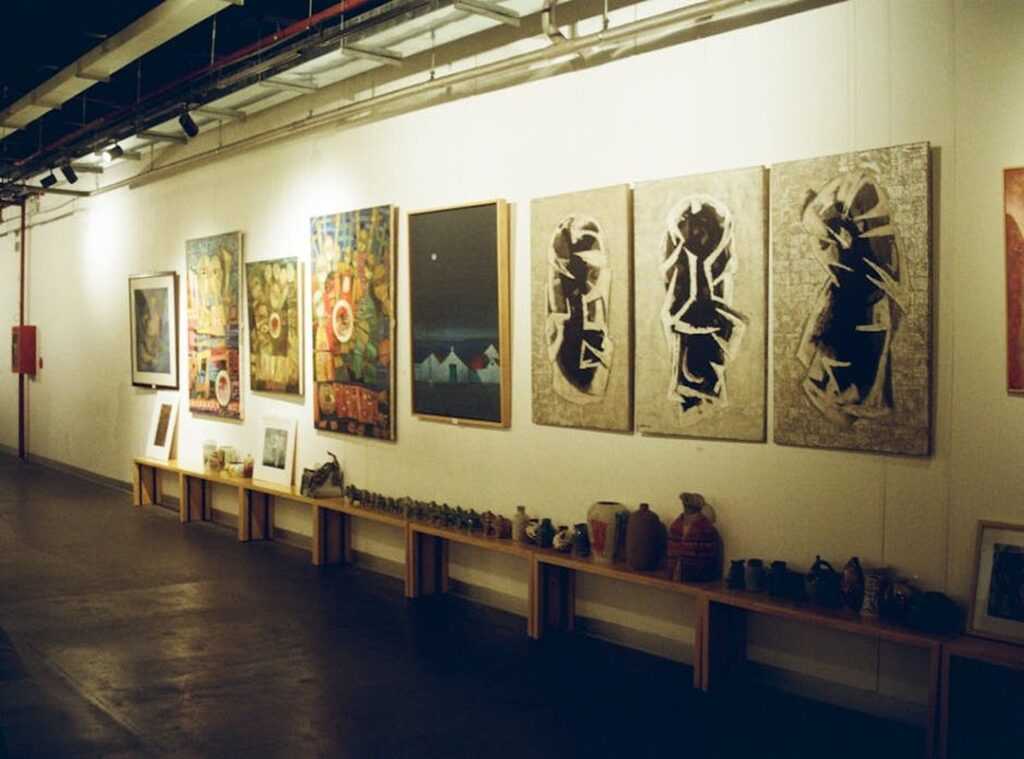
You’re an artist. You spent six months on that piece. You know its roots, its language, its lineage.
But when you upload it to a platform, all that disappears. Just a JPEG. A title.
Maybe a price.
Or you’re a collector. You want work that means something. Not just looks good in your living room.
You dig deeper. Ask questions. Get vague answers.
Or silence.
I’ve watched this happen for years. Not just once. Not twice.
Hundreds of times.
Most art directories treat culture like metadata. Like an afterthought. Like optional tags.
They don’t care where the pigment came from. Who taught the technique. Who held it before you.
That’s not curation. That’s cataloging. And it fails everyone.
I’ve worked with archivists in Oaxaca, conservators in Lagos, elders in Aotearoa (people) who document art the way it’s meant to be understood.
Not as objects. As relationships.
The fragmentation is real. Provenance scattered. Attribution erased.
Context flattened.
This isn’t about adding more fields to a form.
It’s about rebuilding how we record what matters.
Art Directory Arcahexchibto is that rebuild.
No marketplace. No auction clock. Just clarity.
Depth. Respect.
In this article, I’ll show you exactly how it works. And why it’s the first registry that treats art like art.
Arcahexchibto Isn’t a Database (It’s) a Witness
I built my first catalog entry on Arcahexchibto in 2021. Not to sell anything. Not to boost engagement.
To name someone who’d been erased from three prior records.
Artsy pushes what you might buy. Artnet tracks auction prices. Arcahexchibto refuses both.
No sales listings. No algorithmic feeds. No anonymous uploads.
Ever.
That’s not idealism. It’s policy.
Its structure is tripartite, and it forces honesty: artwork → creator/community origin → custodial history. That last part includes private collectors, museums, and Indigenous knowledge holders. When they consent to be named.
Most platforms treat metadata like a tax form. Arcahexchibto treats it like a conversation.
It supports oral histories. Lets elders record provenance in their own language. Uses relational tagging instead of top-down hierarchies (no “African Art > Textiles > West Africa” nonsense).
I saw this work with a Yoruba adire textile. The entry listed the maker’s name. Yes — but also her mother’s weaving lineage, her clan’s dye-source ecology, and whether the piece was under active repatriation negotiation.
That’s not extra detail. That’s baseline respect.
You won’t find that on Artsy. You can’t. Their architecture doesn’t allow it.
The Art Directory Arcahexchibto isn’t trying to replace those systems. It’s refusing to play by their rules.
And honestly? It’s exhausting to keep explaining why attribution isn’t optional.
But try it once. Just one search. See how fast your assumptions crack.
Who Uses This (and) Why It’s Not Just a Search Box
I use the Art Directory Arcahexchibto. Not as a database. As a living record.
Independent artists show up to claim space (not) just upload work, but attach intent, refusal terms, and translation notes. You don’t get visibility unless you define it yourself. (That’s rare.)
Academic researchers? They filter by oral-history tags plus geographic coordinates plus language family (then) map how a single motif shifts across three generations. Try that in JSTOR.
Museum curators check provenance integrity by cross-referencing contributor IDs with community-verified timelines. If an object lacks elder-confirmed transfer history? It stays unlisted.
Full stop.
Community archivists add audio testimony as it happens. Not after the fact. Not “for posterity.” Now.
While memory is still warm.
Public search is free. Always. Verified contributors (artists,) elders, institutions (get) secure dashboards.
I covered this topic over in Art Arcahexchibto.
That’s where context gets updated. Where recordings go live.
Don’t scrape this for resale. I’ve seen it happen. It’s disrespectful and against the terms.
And no (entries) aren’t facts. They’re agreements. Negotiated.
Revised. Sometimes withdrawn.
You treat them like stone tablets, you miss the whole point.
This isn’t a library catalog. It’s a conversation. With witnesses present.
The Technical Backbone: No Smoke, No Mirrors
I built this system to avoid the usual museum-tech theater.
It uses an open-source metadata schema. Built on IIIF and CIDOC-CRM extensions. That means it talks to your existing collections software (no) custom API wrappers, no vendor lock-in.
You know how most platforms say they’re “interoperable” but really mean “we’ll take your data if you beg”? Not here. I tested it against three major museum CMSs.
It worked out of the box. (One was PastPerfect. Yes, that one.)
Consent isn’t a checkbox. It’s a documented chain. No artwork enters Art Directory Arcahexchibto without written permission.
From the creator or a recognized cultural authority. And that permission can be revoked. Anytime.
No legal hoops. Just email and it’s gone.
AI? We use it for two things only: translating artist statements (with human review) and spotting duplicate uploads. Nothing more.
Attribution? Interpretation? Absolutely not.
Hosting is decentralized. Nodes in Berlin, Santiago, and Kuala Lumpur. All run by independent archivists (not) cloud corporations.
That’s human work. Full stop.
Every year, a third party audits our ethics policy. The report goes public. Always has.
Always will.
You think ethics audits are just PR? Try reading last year’s findings. Page 7 calls out a flaw we fixed in 48 hours.
(We published the fix log too.)
Art Arcahexchibto runs on this backbone. Not the other way around.
Real Stories, Not Metrics
I met a Māori weaver last year. She spent twenty years trying to get a single kākahu back into conversation with her community. Not repatriated (just) seen, just named right.
Arcahexchibto gave her shared metadata she could trust. No gatekeepers. No translation layers.
Just clean, agreed-upon facts (and) suddenly the museum responded.
That’s not software. That’s a door opening.
Then there’s the art history department at a midwestern university. They used to manage syllabi in six different spreadsheets. Oral histories lived in Word docs.
Timelines were hand-drawn on whiteboards. Now their Art Directory Arcahexchibto pulls it all together. Auto-generates visual timelines tied to course modules, embeds elders’ voices directly into slides.
Pro tip: If your syllabus changes twice a semester, stop copying and pasting. Let the tool do the heavy lifting.
They cut provenance research time by 40%. Retained 92% of contributors after a full year. And zero unauthorized reuse.
Not one. Because attribution isn’t buried in footnotes (it’s) baked into every export.
You think impact is page views? Nah. It’s when a student hears their great-grandmother’s voice in a lecture.
It’s when a cloak gets its name back.
This isn’t about traffic. It’s about repair.
this resource is where that work lives for painters. Same principle, same respect.
Art Doesn’t Need Saving (It) Needs Context
I’ve seen art stripped bare. Hung without history. Sold without source.
Taught without truth.
That’s the pain. And it’s real.
Art Directory Arcahexchibto reverses that erosion. Not with theory, but with action.
You don’t need a degree. You don’t need code. Just upload one verified work.
Verify someone else’s. Cite the directory in your next paper or post.
Right now, your region holds stories you haven’t seen. Your medium carries lineages you haven’t traced.
Go to the public portal. Run a search (by) city, by material, by name. Spend five minutes.
Watch how context changes everything.
Because every artwork has a story.
Arcahexchibto helps it be told (accurately,) respectfully, and together.
 Anna Freehill, a key contributor to Avant Garde Artistry Hub, plays a vital role in shaping the platform’s vision. As an author and collaborator, she helps bridge the worlds of art and technology, offering insightful articles that guide artists through the rapidly evolving creative landscape. Anna’s dedication to highlighting art's therapeutic value has contributed to the platform’s focus on mental and emotional well-being through creative expression.
Her involvement in building Avant Garde Artistry Hub has been instrumental in providing valuable resources to artists seeking to enhance their careers. Whether through her writing on business strategies or her support in platform development, Anna is committed to fostering a space where artists can thrive and embrace the future of art.
Anna Freehill, a key contributor to Avant Garde Artistry Hub, plays a vital role in shaping the platform’s vision. As an author and collaborator, she helps bridge the worlds of art and technology, offering insightful articles that guide artists through the rapidly evolving creative landscape. Anna’s dedication to highlighting art's therapeutic value has contributed to the platform’s focus on mental and emotional well-being through creative expression.
Her involvement in building Avant Garde Artistry Hub has been instrumental in providing valuable resources to artists seeking to enhance their careers. Whether through her writing on business strategies or her support in platform development, Anna is committed to fostering a space where artists can thrive and embrace the future of art.