
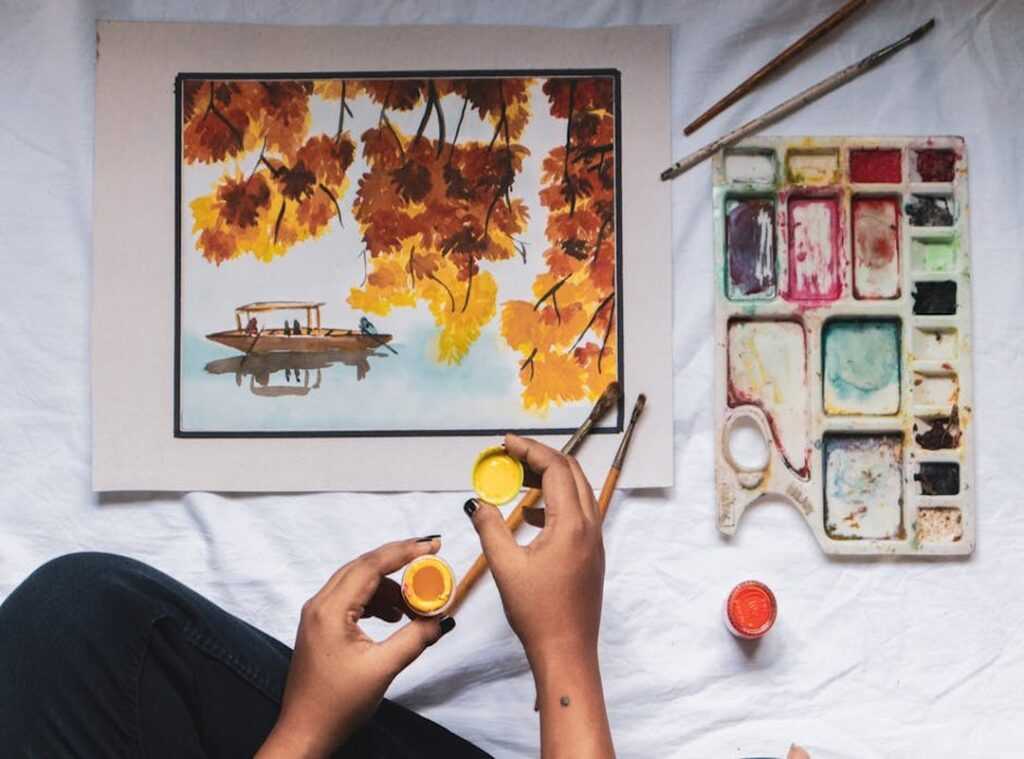
You made something real.
It’s good. Maybe even great.
But nobody’s seeing it.
You’ve stared at your portfolio for weeks. Sent emails into the void. Watched other artists get featured while your inbox stays empty.
I know that silence. I’ve heard it from hundreds of artists just like you.
This isn’t about talent. It’s about knowing where to go and how to show up.
Art Articles Artypaintgall is one of those places. But not the only one. And not the easiest.
I’ve helped artists land features in publications that actually move careers forward. Not vanity spots. Real ones.
No gatekeepers hiding behind jargon.
No vague advice like “build your brand” or “network more.”
Just a tight list of working publications. A step-by-step submission plan. What to send.
When to follow up. What not to say.
You’ll walk away with a clear path (not) another list of shoulds.
Social Media Is Not Your CV
I’ve watched artists pour years into Instagram and still get passed over for gallery representation.
You think followers equal credibility? They don’t. A thousand likes is noise.
A feature in a real art publication? That’s third-party validation.
It means someone with taste, authority, and editorial standards looked at your work (and) chose it.
That’s why I send every serious artist to Artypaintgall first. Not as a backup plan. As step one.
Let’s be real: collectors scroll past reels. But they save PDFs of Art Articles Artypaintgall features. They print them.
They file them next to grant applications.
Here’s what happens when you land that feature:
- Curators start recognizing your name before they see your portfolio
- Your CV stops looking thin and starts looking legitimate
I once worked with a painter who’d been grinding on TikTok for 18 months. Zero studio visits. Then she got a 3-page spread in a mid-tier journal.
Two weeks later? A solo show offer. No pitch.
No DMs. Just the article circulating slowly among people who actually buy.
You can’t algorithm your way into that room.
Social media gets you seen. Publications get you believed.
And belief is what moves careers forward.
Not clicks. Not shares. Belief.
Art Publications That Still Matter in 2024
Let’s cut the fluff. Most “curated lists” are recycled from 2019 with a fresh coat of SEO paint.
I’ve pitched to over 40 art pubs in the last five years. Some said yes. Most ghosted me.
A few changed my career.
Here’s what actually works right now.
The Established Print & Digital Giants
Artforum is still the gatekeeper. It covers theory-heavy, museum-backed work. If you’re not affiliated with a blue-chip gallery or MFA program, your pitch will land in the void.
Frieze leans slightly more accessible. But only if your work references post-structuralism or has a Berlin residency on the CV.
These outlets move slow. Very slow. You’ll wait three months for a rejection that says “not quite right for us at this time.” (Which means: not right ever.)
Influential Online-Only Platforms
Hyperallergic moves fast. They want timely angles (like) how a local mural got whitewashed after city council backlash. Not your studio process.
Colossal? They care about craft and visual punch. A single strong image can get traction.
Even without a thesis statement.
They don’t need your CV. They need a hook. And they’ll publish it in 72 hours if it lands.
Niche & Emerging Artist Journals
Juxtapoz champions street-influenced painting and illustration. It’s less about credentials, more about energy.
New American Paintings is jury-selected. But it’s one of the few places where unknowns get real exposure. I saw a friend’s work there, then watched a dealer slide into her DMs two weeks later.
These aren’t stepping stones. They’re launchpads (if) you stop waiting for Artforum’s permission.
You’re not building a résumé. You’re building visibility.
And by the way. Skip the generic press release. Lead with conflict.
Or surprise. Or something human.
Art Articles Artypaintgall isn’t a magic keyword. It’s just another phrase people type when they’re tired of vague advice.
How to Pitch Art Articles That Get Opened
I sent my first pitch to a major art magazine in 2019.
It got deleted before I finished the subject line.
Here’s what I learned the hard way.
Step one: Research before you reach out. Read at least three recent pieces from the publication. Not just the headlines (the) voice, the pacing, how they frame artists.
If they run gritty studio tours with zero fluff, don’t send them a poetic manifesto. Find the editor’s name. LinkedIn works.
Twitter works. A polite “Hi, I’m [Name], I love your coverage of emerging painters” email to the general inbox might get forwarded. But it probably won’t.
Step two: Build your digital press kit. Not a PDF. Not a Google Drive folder with no permissions.
A single webpage or clean ZIP with:
- Five to seven high-res images (named: “RiosSunroom2024.jpg”, not “IMG_1234.jpg”)
- A 120-word artist statement (cut the jargon (say) what you do, not what you “explore”)
- A bio that names real shows, grants, or residencies (no “emerging visionary”)
- A working link to your site
Step three: Write the pitch email.
Subject line: “Pitch: [Your Name] on [Specific Topic]. For [Publication Name]”
No “Re: Following up!”
No “Hope this finds you well!”
Body:
Hi [Editor’s Name],
I’ve admired your recent features on ceramic abstraction (especially) the piece on Lien Vu’s kiln experiments. My new body of work responds directly to that conversation. It uses reclaimed glaze waste as pigment, and I’d love to share how that reshapes material ethics in studio practice.
All assets and context are in my press kit Artypaintgall.
That’s it. No attachments. No “Let me know if you need more.”
Just clarity.
Just respect for their time.
You think editors don’t notice when you’ve read their work? They do. And they’ll reply.
Key Mistakes That Guarantee Your Submission Gets Ignored
I open 47 emails a day. Yours is one of them.
The Mass BCC Email? I delete it before the subject line finishes loading. (Yes, really.)
I wrote more about this in Art Listings Artypaintgall.
You think “Dear Editor” feels personal? It doesn’t. It feels lazy.
Like sending a group text to your ex’s entire family.
Submission guidelines exist for one reason: to see if you read. If you skip them, you fail the first test. No debate.
No second chance.
Poor images kill submissions faster than typos. Blurry. Crooked.
Bad lighting. Wrong file type. All of it screams “I don’t care enough to show my work properly.”
The art is the star. Everything else is just noise.
If your image looks like it was taken in a closet with a flashlight, no editor will click through to your bio or statement.
Art Articles Artypaintgall isn’t about volume (it’s) about respect for the process.
Want to fix this fast? Start here: this guide
Stop Waiting for Permission
You’re tired of shouting into the void. Tired of your work getting buried under someone else’s feed. Tired of hearing “not a fit” from editors who never read past your subject line.
This isn’t about luck.
It’s about showing up (professionally,) deliberately, once.
You already have the list. You already know which publication fits your voice. So pick one.
Just one.
Your task this week: Choose Art Articles Artypaintgall from Section 2. Spend 30 minutes. Find the editor’s name.
Read two of their recent pieces. Then write one real sentence about why your work belongs there.
That’s it. No grand launch. No perfect pitch.
Just one step (taken.)
You control the timeline. You own the narrative. Start now.
 Anna Freehill, a key contributor to Avant Garde Artistry Hub, plays a vital role in shaping the platform’s vision. As an author and collaborator, she helps bridge the worlds of art and technology, offering insightful articles that guide artists through the rapidly evolving creative landscape. Anna’s dedication to highlighting art's therapeutic value has contributed to the platform’s focus on mental and emotional well-being through creative expression.
Her involvement in building Avant Garde Artistry Hub has been instrumental in providing valuable resources to artists seeking to enhance their careers. Whether through her writing on business strategies or her support in platform development, Anna is committed to fostering a space where artists can thrive and embrace the future of art.
Anna Freehill, a key contributor to Avant Garde Artistry Hub, plays a vital role in shaping the platform’s vision. As an author and collaborator, she helps bridge the worlds of art and technology, offering insightful articles that guide artists through the rapidly evolving creative landscape. Anna’s dedication to highlighting art's therapeutic value has contributed to the platform’s focus on mental and emotional well-being through creative expression.
Her involvement in building Avant Garde Artistry Hub has been instrumental in providing valuable resources to artists seeking to enhance their careers. Whether through her writing on business strategies or her support in platform development, Anna is committed to fostering a space where artists can thrive and embrace the future of art.