
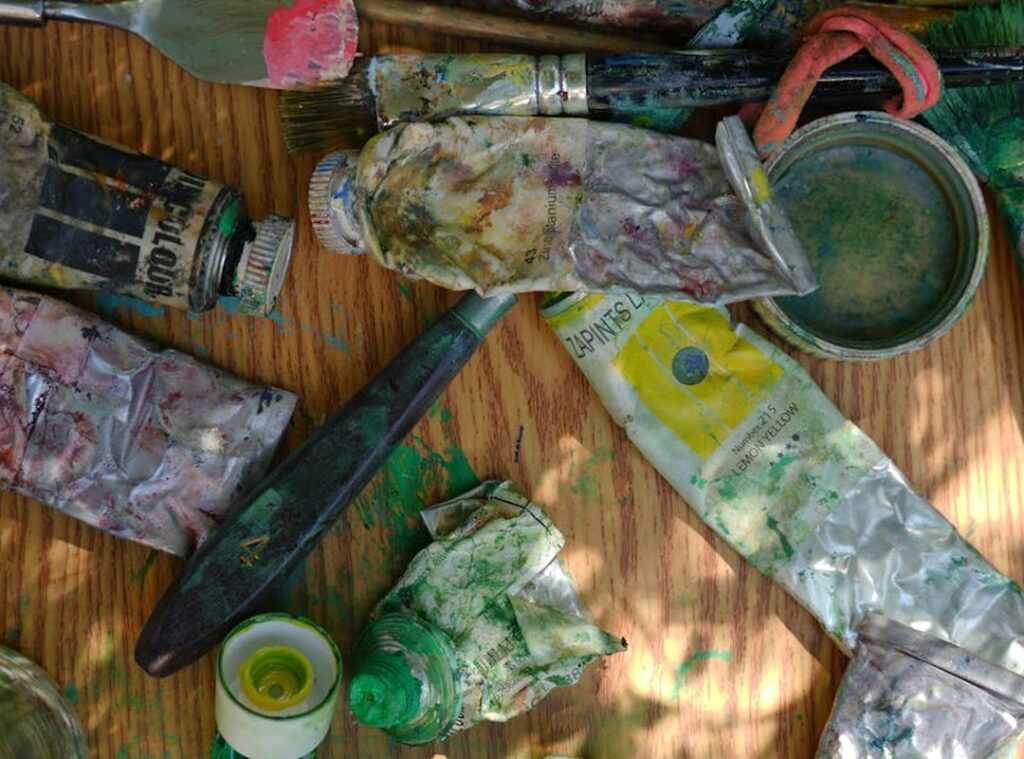
You walk into the gallery. Your shoes click on the floor. The paintings stare back.
And you think: What am I missing?
I’ve watched this happen hundreds of times.
People standing in front of a canvas, arms crossed, nodding slowly. Not because they get it, but because they’re scared to admit they don’t.
That’s why this exists. To cut through the noise. To give you real footing with Artypaintgall.
No jargon. No gatekeeping. Just straight talk from years of talking to first-time buyers, nervous students, and curious strangers who asked the same questions you’re asking right now.
You’ll learn what makes a painting belong in a gallery. How to spot major styles without memorizing dates. And how to look at art like you belong there.
Because you do.
This isn’t theory.
It’s what works.
What Makes a Painting Gallery-Worthy?
It’s not about how pretty it is. I’ve seen gorgeous paintings get rejected flat. And I’ve seen rough, unsettling ones hang front-and-center.
Gallery selection isn’t decoration. It’s curation. Curators look for originality first.
Not just “different,” but unmistakably yours. A voice you can’t confuse with anyone else.
They also check technical skill. Not perfection. Control.
Can you handle the medium like it’s an extension of your hand? Or does the paint feel like it’s fighting you?
Then there’s concept. Does it hold up past the first glance? Does it make you pause, rethink, or even argue with it?
(Yes, anger counts as engagement.)
Reputation matters (but) not always. Emerging artists get shows too. What matters is whether their work adds something to the conversation happening right now.
Mass-produced art? That’s wallpaper with ambition. Think of it like comparing a chef’s tasting menu to a drive-thru burger.
Same category. Food — but entirely different stakes.
Gallery art lives in context. It talks to history, politics, identity, silence. It doesn’t just sit there.
It interrupts.
You want to know what separates those layers in real time?
This guide breaks down how curators actually decide. No gatekeeping, just straight talk.
Artypaintgall isn’t a filter. It’s a lens. Use it wrong, and you’ll miss everything.
Paint Styles You’ll Actually See (Not Just Pretend to Understand)
Abstract Art is not a puzzle. It’s not hiding something from you. It’s color, shape, and texture doing work on your nervous system.
I felt my shoulders drop the first time I stood in front of a Rothko at MoMA. You don’t need to name it. You just need to feel it.
Does it make you restless? Calm? Angry?
Good. That’s the point.
Figurative & Portrait Painting is still breathing. Hard. Not as stiff museum relics.
These are faces that stare back, sometimes with sweat on the brow or a phone glow on the cheek. One artist painted her grandmother holding a vape pen. Another showed a trans teen mid-laugh, sunlight catching their hair.
This isn’t about likeness. It’s about identity as lived, messy, and urgent.
Space Painting isn’t just trees and sky anymore. Yes, some artists still paint mountains like they’re 1890. But others use the same format to show a freeway overpass cutting through a forest (or) a glacier retreating in real time.
A recent show at the Met had one oil painting where half the canvas was scraped raw. The other half showed a perfect meadow. No explanation needed.
You got it.
Still Life used to be fruit bowls and dead pheasants. Now it’s expired protein bars, cracked AirPods, and a single coffee cup with lipstick on the rim. It’s quieter than the other styles (but) sharper.
It forces you to look at what you toss, what you keep, what you ignore. I once stared at a painting of three identical water bottles for seven minutes. Felt weirdly seen.
You’ll find all these styles side by side at Artypaintgall. No labels telling you how to feel. No hierarchy.
Just choices (and) your gut reaction.
Some people say abstract art is lazy. I disagree. It takes more courage to leave things unnamed.
Others claim portraits are outdated. Tell that to the line outside the Whitney waiting for the new self-portrait survey.
Space? Too pretty. Sure.
Until you see one that shows your neighborhood underwater.
Still life is boring? Then why do you keep looking at that photo of your kitchen counter at 2 a.m.?
Trust your first reaction. Then ask: Why did that hit me? Not what it means.
How it lands.
Originals vs Prints: What You’re Actually Buying
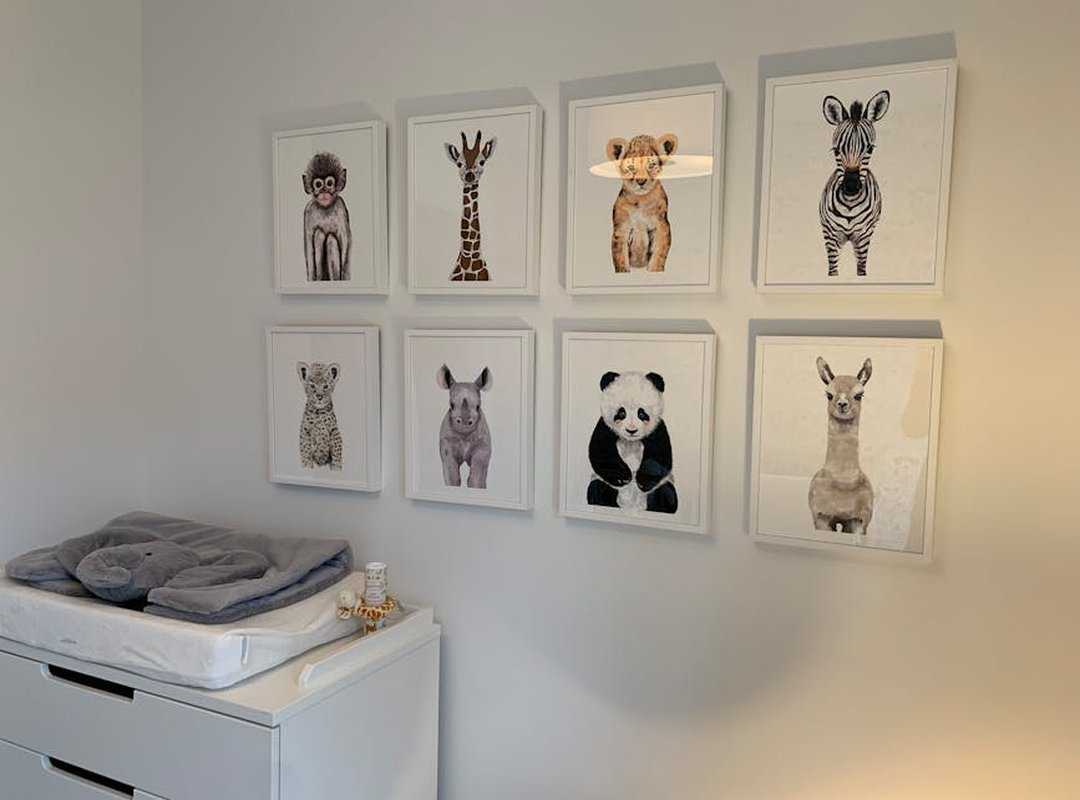
I’ve watched people pay $300 for a poster thinking it was a limited print. Then they found out it was open edition. And cried a little.
An Original Painting is the real thing. One piece. Made by hand.
I wrote more about this in Artypaintgall Famous Art Articles by Arcyart.
No copies. That’s why it costs more. It’s not just paint on canvas.
It’s time, risk, and fingerprints.
Limited Edition Prints? They’re signed. Numbered.
Approved by the artist. Giclée or lithograph. Usually under 250 copies.
They hold value because scarcity matters. And because the artist said yes.
Open Edition Prints? Mass-produced. No number.
No signature. Hang it in your bathroom. Love it there.
Just don’t call it an investment.
You’re not stupid for mixing these up. The labels are muddy. Galleries don’t always clarify.
And yeah. Some sellers lean into the confusion.
Here’s how they actually stack up:
| Type | Rarity | Artist Involvement | Typical Value |
|---|---|---|---|
| Original Painting | One-of-a-kind | Full hands-on creation | Highest |
| Limited Edition Print | Small batch (e.g., 1 (250)) | Signed, numbered, approved | Medium to high |
| Open Edition Print | Unlimited | Often none | Low (decorative only) |
I once bought a “limited” print (turned) out the edition wasn’t limited at all.
The gallery used “limited” as a vibe, not a fact.
That’s why I always check the certificate before paying. Or ask straight up: “Is this numbered? Is the artist’s signature on the print itself?”
Artypaintgall isn’t a brand. It’s a reference point (one) I use when double-checking terms.
If you want deeper context on how artists label their work, this guide breaks down real examples from working studios.
Don’t assume. Ask. Then walk away if they hesitate.
How to Actually Look at a Painting
I stand in front of a painting and feel nothing. That’s fine. That’s step one.
The Gut Reaction: What hits you first? Boredom? A lump in your throat?
The urge to check your phone? Don’t judge it. Just name it.
Then step forward. Not metaphorically. Physically.
Get close enough to see the ridges in the paint. Is the blue made of tiny dots or thick slabs? Is the edge sharp or blurred?
You’re not looking at the subject. You’re looking at the making.
Now glance at the plaque. Not to memorize dates (but) to answer one question: Why would someone make this right then?
The title alone often flips the whole thing.
Artypaintgall is full of people doing exactly this (badly,) beautifully, slowly. Try it tomorrow. At any museum.
Or even a coffee shop wall. You’ll be surprised how fast your eyes change.
Your First Real Look at a Painting
I used to stand frozen in front of paintings. Heart racing. Convinced I was missing something obvious.
You’re not supposed to know everything. You just need to look. And ask one real question.
That’s it.
The intimidation? It’s not about you. It’s about bad framing.
Wrong expectations. Art galleries don’t gatekeep. People do.
Including you, sometimes.
Your reaction is valid. Your confusion is valid. Your boredom is valid.
Your joy is valid.
No test. No score. No expert breathing down your neck.
Try it this week. Walk into any local gallery. Pick Artypaintgall.
Just one painting.
Spend two minutes with it. Ask: What do I see? What does it remind me of?
What does it make me feel?
That’s your art adventure. Not later. Not when you’re “ready.”
It starts now.
 Anna Freehill, a key contributor to Avant Garde Artistry Hub, plays a vital role in shaping the platform’s vision. As an author and collaborator, she helps bridge the worlds of art and technology, offering insightful articles that guide artists through the rapidly evolving creative landscape. Anna’s dedication to highlighting art's therapeutic value has contributed to the platform’s focus on mental and emotional well-being through creative expression.
Her involvement in building Avant Garde Artistry Hub has been instrumental in providing valuable resources to artists seeking to enhance their careers. Whether through her writing on business strategies or her support in platform development, Anna is committed to fostering a space where artists can thrive and embrace the future of art.
Anna Freehill, a key contributor to Avant Garde Artistry Hub, plays a vital role in shaping the platform’s vision. As an author and collaborator, she helps bridge the worlds of art and technology, offering insightful articles that guide artists through the rapidly evolving creative landscape. Anna’s dedication to highlighting art's therapeutic value has contributed to the platform’s focus on mental and emotional well-being through creative expression.
Her involvement in building Avant Garde Artistry Hub has been instrumental in providing valuable resources to artists seeking to enhance their careers. Whether through her writing on business strategies or her support in platform development, Anna is committed to fostering a space where artists can thrive and embrace the future of art.