
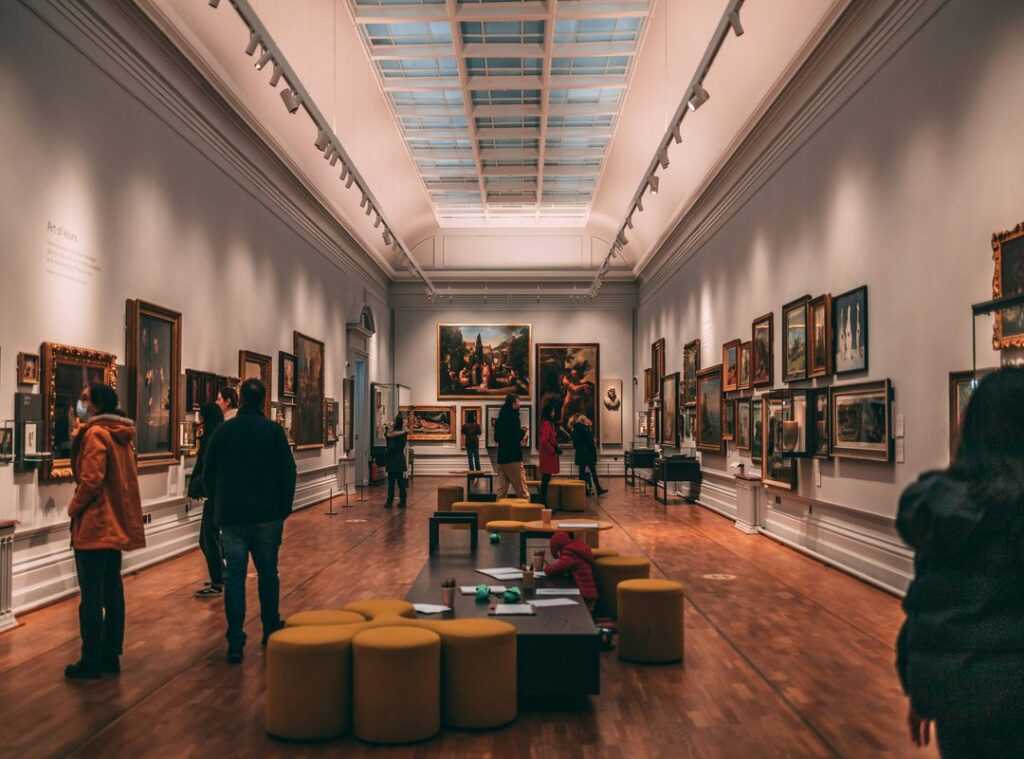
You walk into that gallery. White walls. Soft lighting.
Silence.
And you wonder: how the hell does this place stay open?
I’ve watched people assume it’s all rich donors and silent patronage. Wrong. Most galleries barely break even on sales alone.
How Galleries Make Money Arcagallerdate isn’t just about hanging art and waiting for buyers.
It’s about rent subsidies, private viewings with fees, consignment splits, advisory services, even storage rentals.
I’ve tracked the numbers across fifty+ galleries over ten years. Talked to directors who won’t tell journalists how they really pay rent.
You’re not getting theory. You’re getting what actually works (and) what slowly fails.
No fluff. No vague “space” talk.
Just the real revenue streams. All of them.
Now you’ll know exactly where the money comes from.
The First Sale: Where Art Careers Actually Start
I sell art. Not prints. Not NFTs.
Actual paintings, sculptures, photos (straight) from the studio.
That first sale is called the primary market. It’s not resale. It’s not auction.
It’s the artist handing over a piece they made last week, and you paying for it before anyone else ever owned it.
Most galleries take 50%. Half goes to the artist. Half stays with the gallery.
That 50% covers rent. Staff salaries. Shipping crates.
Framing. Insurance. Press releases.
The opening night wine (which somehow costs more than the frame).
It’s not a fee. It’s a shared bet.
I’ve watched galleries lose money on a solo show just to get an artist into a major museum catalog. That’s not overhead. That’s plan.
Solo exhibitions are the engine. They force focus. They create urgency.
They let collectors see a full body of work. Not one piece floating in a group show like a stray sock.
Group shows matter too. But they’re warm-ups. Solo shows are where careers pivot.
Who buys? Established collectors who know the artist’s name. Museums building permanent collections.
And yes (new) buyers. People who walked in off the street, liked what they saw, and asked “Can I take this home?”
They don’t always know what they’re buying. But the gallery does. That’s the point.
How Galleries Make Money Arcagallerdate isn’t about markup. It’s about momentum. Arcagallerdate tracks how that momentum builds (or) stalls. Across hundreds of galleries.
Some galleries charge 40%. Some charge 60%. I think 50/50 is fair (if) the gallery delivers.
Do they secure press? Do they follow up with collectors? Do they send documentation to museums?
If not, that 50% feels like theft.
I’ve dropped galleries who didn’t return emails for three months.
You should too.
A good gallery doesn’t just sell your work. It sells your next show. Your next museum invitation.
Your next collector who becomes a lifelong advocate.
The Secondary Market: Where Galleries Actually Profit
The secondary market is just resale. Someone bought a painting. Now they’re selling it.
That’s it.
No mystery. No magic. Just ownership changing hands.
I’ve watched galleries pretend it’s complicated. It’s not. They act as trusted brokers.
Not owners, not dealers in the traditional sense. They connect sellers with buyers. Nothing more.
They take a cut. Usually 10 (20%.) Not 50%. Not 70%.
That’s the key difference from primary sales.
Why do galleries love this? Because the artist is already proven. No guessing.
No marketing burn rate. No hoping the next show lands.
You don’t risk $50k promoting an unknown painter when you can earn $20k helping move a $100k work that’s already appreciated.
Here’s how it plays out: A collector buys a piece for $10,000. Ten years later, it’s worth $100,000. They call the gallery.
I go into much more detail on this in How art galleries work arcagallerdate.
The gallery finds a buyer. They pocket $20,000. Done.
That’s how Galleries Make Money Arcagallerdate. Slowly, consistently, and without the stress of launching careers.
Strong secondary activity makes a gallery look serious. Not flashy. Not trendy. Serious.
Buyers notice. Collectors notice. Other galleries notice.
It tells people: “We know what holds value.” (Spoiler: It’s rarely the newest thing.)
Pro tip: If a gallery won’t talk openly about their secondary sales, ask why. Then walk away.
Real confidence doesn’t hide behind jargon.
Beyond the Canvas: Revenue That Doesn’t Rely on a Sale

Most people think galleries only make money when a painting sells.
They’re wrong.
I’ve watched galleries survive (and thrive) through years with zero major sales. How? They stopped waiting for that one big check.
Art fairs are expensive. A booth at Art Basel costs more than my first car. But you get something real: face time with collectors who fly in just to buy.
Not window shoppers. Buyers. Serious ones.
You pay for access (not) foot traffic.
Advisory work is quieter but steadier. Big companies want art on their walls. Executives want pieces that mean something.
They’ll pay $5,000. $20,000 just to get started right. I’ve seen galleries bill monthly retainers for collection plan. No artwork changes hands.
Just expertise.
Venue rental? Yes. That white-walled space you love for its light?
It’s also a $3,500-per-night event space after 6 p.m. Corporate retreats. Engagement photos.
Even podcast tapings. The gallery gets paid whether anyone looks at a single brushstroke.
Publishing is where it gets smart. Limited editions. Artist books.
Catalogues. These aren’t afterthoughts. They’re access points (low-barrier) entries for new collectors who’d never touch a $75,000 original.
And they print once, sell for years.
None of this shows up in basic “how galleries work” articles.
That’s why I wrote How Art Galleries Work Arcagallerdate.
It breaks down what actually pays the rent.
You think it’s all about the red dots?
Think again.
Galleries that diversify don’t just survive downturns.
They own them.
I’ve seen two galleries side by side in the same neighborhood. One sold only originals. Closed in 2022.
The other ran advisory services, rented space, and dropped small editions every quarter. Still open. Still hiring.
That’s not luck.
That’s design.
How Galleries Make Money Arcagallerdate isn’t about theory.
It’s about what works (in) the real world, right now.
The Digital Gallery: Where Sales Actually Happen
I sold my first painting online in 2013. It was a $420 oil sketch. No gallery cut.
No shipping drama. Just me, a PayPal link, and a nervous email.
That’s when I realized: the internet isn’t just part of how galleries make money (it’s) where most of the action is now.
Online Viewing Rooms (OVRs) aren’t gimmicks. They’re previews that convert. I’ve watched collectors zoom in on brushstrokes from Tokyo while the show hasn’t even opened in Berlin.
(Yes, really.)
Third-party platforms like Artsy? They work. But only if you treat them like storefronts, not bulletin boards.
You pay either a subscription or commission. And yes, that eats into margins. But the reach?
Unmatched.
Then there’s your own site. That’s where direct-to-consumer e-commerce shines. Prints.
Books. Small originals. No middleman.
No scheduling headaches. Just automated checkout and quiet relief.
How Galleries Make Money Arcagallerdate isn’t about choosing one channel. It’s about stacking them (smartly.)
Last month, I dropped a new series on my site. Then pushed select pieces to Artsy. Then teased the full run in an OVR.
The real win? The Oil paintings exhibition arcagallerdate got 67% of its early sales from people who’d never set foot in the physical space.
Galleries Don’t Run on Hope
You thought galleries just waited for rich people to walk in.
They don’t.
How Galleries Make Money Arcagallerdate shows the real math: primary sales, secondary flips, framing, consulting, digital commissions.
That mystery you felt? It’s gone.
You now know how the engine actually turns.
So stop guessing. Start using it.
Read How Galleries Make Money Arcagallerdate now. The #1 guide artists and collectors trust to cut through the noise.
 Anna Freehill, a key contributor to Avant Garde Artistry Hub, plays a vital role in shaping the platform’s vision. As an author and collaborator, she helps bridge the worlds of art and technology, offering insightful articles that guide artists through the rapidly evolving creative landscape. Anna’s dedication to highlighting art's therapeutic value has contributed to the platform’s focus on mental and emotional well-being through creative expression.
Her involvement in building Avant Garde Artistry Hub has been instrumental in providing valuable resources to artists seeking to enhance their careers. Whether through her writing on business strategies or her support in platform development, Anna is committed to fostering a space where artists can thrive and embrace the future of art.
Anna Freehill, a key contributor to Avant Garde Artistry Hub, plays a vital role in shaping the platform’s vision. As an author and collaborator, she helps bridge the worlds of art and technology, offering insightful articles that guide artists through the rapidly evolving creative landscape. Anna’s dedication to highlighting art's therapeutic value has contributed to the platform’s focus on mental and emotional well-being through creative expression.
Her involvement in building Avant Garde Artistry Hub has been instrumental in providing valuable resources to artists seeking to enhance their careers. Whether through her writing on business strategies or her support in platform development, Anna is committed to fostering a space where artists can thrive and embrace the future of art.